For crying out loud, I just heard about another group getting jacked on a request for chlorine free paper. Elemental Chlorine Free (ECF) paper was presented as filling the bill. This happens way too much. People need to understand this issue.
Here is the simple and straightforward on how this happens. A paper buyer is concerned about the issue of chlorine use in pulp production and would like to minimize any impact by selecting paper using the most benign method to chemically produce and whiten pulp.
This is where it gets tricky. Common paper marketing terminology uses several phrases, Elemental Chlorine Free (ECF), Process Chlorine Free (PCF) and Totally Chlorine Free (TCF).
Ahhh…but all of these phrases have the words “Chlorine Free”…that’s the key…it is the first word in the phrase that needs to be focused on. Too many times paper buyers just hear the “chlorine free” part.
Chlorine Free…sounds good right? But what’s the difference?
Well, here is where I am going to bale on explaining the complexities of the bonding characteristics of chlorine, organochlorines, dioxin, furans, 2,3,7,8-TCDD and 2,3,7,8-TCDF and everything else. If you want a science lesson, this ain’t the place. For the explanations about all that, seek out other experts…maybe the guy who did all those swell Bell Lab science movies I saw in school, like “Our Friend Mister Sun.” This isn’t a science lesson, it’s an ENGLISH lesson.
Starting back in the mid 1980’s there was a lot of concern about the interaction of chlorine and the formation of dioxin in the discharge at pulp mills. The US EPA took some action and much of the North American kraft pulp industry opted to replace existing chlorine gas use with other methods that were more acceptable under guidelines called “Cluster Rules”. The industry’s standpoint is that they were adopting “best available technology” to satisfy the requirements of the Cluster Rules. That best available technology chosen by and large are these Elemental Chlorine Free (ECF) bleaching systems.
Now cleaning up any process is going to involve debate about what goes far enough and what is acceptable. In 1906, Upton Sinclair wrote a muckraking blockbuster, The Jungle, about conditions in the meat packing industry. Claims that meat, and particularly sausage of the day, contained vermin, feces and even the occasional human body part, caused an uproar. The meat industry could not actually say there was an “acceptable level” of the above mentioned nastiness; the public demanded the industry fully correct the problem. The Federal government passed the Pure Food & Drug Act. Whether the meat industry and the government did or did not do enough about it is debatable. However, no doubt there were consumers who chose to be more selective (maybe even became vegetarians).
So with paper, there are selective customers, some of whom want chlorine free paper. But the industry’s terminology may not meet the public’s understanding of what chlorine free means.
So here is the simple breakdown.
Most of the North American industry that uses timber for feedstock to make kraft pulp has converted to using Elemental Chlorine Free (ECF) bleaching processes, usually meaning chlorine dioxide is the active chemical compound used. ECF may meet the standards for acceptable non-detection of dioxin, depending on the scale of measurement, but the chemicals, such as chlorine dioxide, are actual compounds and derivatives of chlorine. There are also varying degrees of ECF, some better than others, such as Enhanced ECF (which involves Peroxide, Oxygen or Ozone in conjunction with Chlorine Dioxide).
Currently, I know of only one timber based North American kraft pulp mill using a non-chlorine, Totally Chlorine Free (TCF) system, however that pulp is exported. In Europe, timber based kraft pulp from mills with actual TCF systems is more widely available.
Process Chlorine Free (PCF) systems are common for kraft pulp in North America at the few mills that produce pulp from deinking, meaning the recycling of recovered paper. Most of the PCF kraft pulp and paper currently available in North America comes out of these deinking pulp mills. However, that does not mean that every deinking mill is PCF. I have certainly encountered one deinking pulp operation that says its system uses Hypochlorite, which is not PCF. PCF would involve Peroxide, Hydrosulfite, Oxygen, or Ozone.
So the bottom line is, if you request chlorine free paper, be sure the paper provider can tell you what they mean by “Chlorine Free”. Ask what is used in the bleaching process.
If they reply Elemental Chlorine Free (ECF), they refer to systems not using chlorine gas, but likely involve chlorine derivatives. And be aware that almost every timber based North American kraft pulp mill is ECF…meaning not much special.
If Process Chlorine Free (PCF), that means the pulp is likely recycled fiber…a good thing. It could also be a combination of TCF virgin pulp and PCF recycled pulp. But just to be sure, it may be good to ask what are the chemicals involved. Peroxide, Hydrosulfite, Ozone or Oxygen are key words to listen for.
Totally Chlorine Free (TCF) paper, right now, would likely have to come from pulp or paper imported from Europe and it would refer to virgin paper.
These situations are particular to kraft papers. Mechanical paper in North America, can be made with pulps, such as BCTMP, which can have peroxide bleaching methods.
There is a lot to know about this to really understand the issue. Actually, don’t go rent “Our Friend Mister Sun”, instead check out these guys for further information:
Reach for Unbleached
Natural Resources Council of Maine
Conservatree
Chlorine Free Products Association (CFPA)
The rampant confusion about pulp bleaching certainly cries out for an overseeing third party program. The above mentioned CFPA does certification of pulp bleaching systems for chlorine free claims.
In the meantime regarding bleaching – ask for specifics about the process – don’t be hoodwinked.
Monday, April 23, 2007

Thursday, April 19, 2007
Ask Where Your Paper is From!
I am learning about this blog stuff and one thing is you have to keep it up to date. So sorry if you tuned in and it hasn’t been fresh.
There are a lot of good information sources out there on the web and from time-to-time I will help spread the word about them.
The first I’d like to mention is the Environmental Paper Network’s
The Paper Planet Blog. With posts by Papyrus, Southern Q and others, the website is a go-to place to find out about new developments with environmental paper and serious issues that could harm development of the environmental paper markets. A few weeks back The Paper Planet posted links to the April 1, Washington Post front-page article on the impacts of the paper producing boom and timber trade in China.
Right now China is ramping up exports of newsprint and coated printing papers to the US. Less than 10 years ago newsprint and coated paper trade was flowing from North America to Asia, but now that is reversing. While China does have considerable capacity to produce recycled content newsprint, virtually no capacity exists to produce recycled content papers used for commercial printing of magazines, catalogs, gloss advertising papers and the like. And that type of virgin paper is arriving in the US from China with increasing frequency. So ask where your paper is from.
Thanks to The Paper Planet blog for the nod a few weeks back concerning the start of this blog. The posting paired me with Leonardo DiCaprio as eco leaders! Hey big difference is that Leonardo can make money with his good looks…and I don’t appear on 687 tons of paper posing with polar bears (May issue of Vanity Fair).
Happy Earth Day everyone.
There are a lot of good information sources out there on the web and from time-to-time I will help spread the word about them.
The first I’d like to mention is the Environmental Paper Network’s
The Paper Planet Blog. With posts by Papyrus, Southern Q and others, the website is a go-to place to find out about new developments with environmental paper and serious issues that could harm development of the environmental paper markets. A few weeks back The Paper Planet posted links to the April 1, Washington Post front-page article on the impacts of the paper producing boom and timber trade in China.
Right now China is ramping up exports of newsprint and coated printing papers to the US. Less than 10 years ago newsprint and coated paper trade was flowing from North America to Asia, but now that is reversing. While China does have considerable capacity to produce recycled content newsprint, virtually no capacity exists to produce recycled content papers used for commercial printing of magazines, catalogs, gloss advertising papers and the like. And that type of virgin paper is arriving in the US from China with increasing frequency. So ask where your paper is from.
Thanks to The Paper Planet blog for the nod a few weeks back concerning the start of this blog. The posting paired me with Leonardo DiCaprio as eco leaders! Hey big difference is that Leonardo can make money with his good looks…and I don’t appear on 687 tons of paper posing with polar bears (May issue of Vanity Fair).
Happy Earth Day everyone.
Wednesday, March 28, 2007
The Lowdown on Tree-Free Paper
Every week I get several calls or e-mails about hemp paper…but considering the number of calls I get, actual interest in creating a market for such a product seems to involve more smoke than a Cheech & Chong movie.
OK, before the Hemp Army descends on me let me say this: I grew up in the Haight Ashbury before the Summer of Love started, I remember my grandmother calling the Flower Children who slept on her fire escape “juvenile delinquents”, which I mistakenly heard as “juvenile Lincolns”…(whatever that could be)…but it was cool with me and we had the double-door split-windshield VW bus…man, we were the real deal hippies before anyone…and we knew better than to try to smoke a banana. -- Gotta establish my hippie credentials here.
Anyway, all this to say, yes I’ve talked to countless people about tree-free paper over the years and wide spread consumer support for tree-free paper from my point of view has essentially been a lot of talk. Simply put: If the hybrid vehicle market depended on the tire-kickers who inquire about tree-free paper, we would all be driving V-8s for years to come.
I want to be clear that there are some very dedicated producers and marketers of nonwood papers. People who have put heart and soul to making tree-free paper a reality. For the most part the standard paper-making industry has ignored alternative fiber, other than the existing market for high-end cotton correspondence paper. What does currently exist in the alternative fiber paper market is out there due to the forward thinking and perseverance of a handful of individuals, not major paper producing corporations. People like Tom Rymsza, Carolyn Moran, Odette Kalman, Harry Johansing, Jeff Lindenthal and Rick Smith. If you are looking for treefree, alternative fiber, nonwood paper…it would be a good idea to support these guys and buy their products. Right now Paper Inc. ain’t really doing much as far as creating an infrastructure to utilize nonwood pulp.
Follow this link to a piece I wrote for the Conservatree website. If you truly want tree-free paper, this is the guide to the current supply of alternative fiber papers. I really do believe that hemp and other nonwood fibers have great promise for the future of paper making. I may have started out giving the needle to the hemp paper advocates, but as you will see, I really reserve the jaundiced eye for the “environmentalists” who proposed plastic as a reasonable substrate for printed mass communications.
If you find I have left off some nonwood alternative paper producer from the piece, by all means please contact me…and we can hash it out.
OK, before the Hemp Army descends on me let me say this: I grew up in the Haight Ashbury before the Summer of Love started, I remember my grandmother calling the Flower Children who slept on her fire escape “juvenile delinquents”, which I mistakenly heard as “juvenile Lincolns”…(whatever that could be)…but it was cool with me and we had the double-door split-windshield VW bus…man, we were the real deal hippies before anyone…and we knew better than to try to smoke a banana. -- Gotta establish my hippie credentials here.
Anyway, all this to say, yes I’ve talked to countless people about tree-free paper over the years and wide spread consumer support for tree-free paper from my point of view has essentially been a lot of talk. Simply put: If the hybrid vehicle market depended on the tire-kickers who inquire about tree-free paper, we would all be driving V-8s for years to come.
I want to be clear that there are some very dedicated producers and marketers of nonwood papers. People who have put heart and soul to making tree-free paper a reality. For the most part the standard paper-making industry has ignored alternative fiber, other than the existing market for high-end cotton correspondence paper. What does currently exist in the alternative fiber paper market is out there due to the forward thinking and perseverance of a handful of individuals, not major paper producing corporations. People like Tom Rymsza, Carolyn Moran, Odette Kalman, Harry Johansing, Jeff Lindenthal and Rick Smith. If you are looking for treefree, alternative fiber, nonwood paper…it would be a good idea to support these guys and buy their products. Right now Paper Inc. ain’t really doing much as far as creating an infrastructure to utilize nonwood pulp.
Follow this link to a piece I wrote for the Conservatree website. If you truly want tree-free paper, this is the guide to the current supply of alternative fiber papers. I really do believe that hemp and other nonwood fibers have great promise for the future of paper making. I may have started out giving the needle to the hemp paper advocates, but as you will see, I really reserve the jaundiced eye for the “environmentalists” who proposed plastic as a reasonable substrate for printed mass communications.
If you find I have left off some nonwood alternative paper producer from the piece, by all means please contact me…and we can hash it out.
Wednesday, March 21, 2007
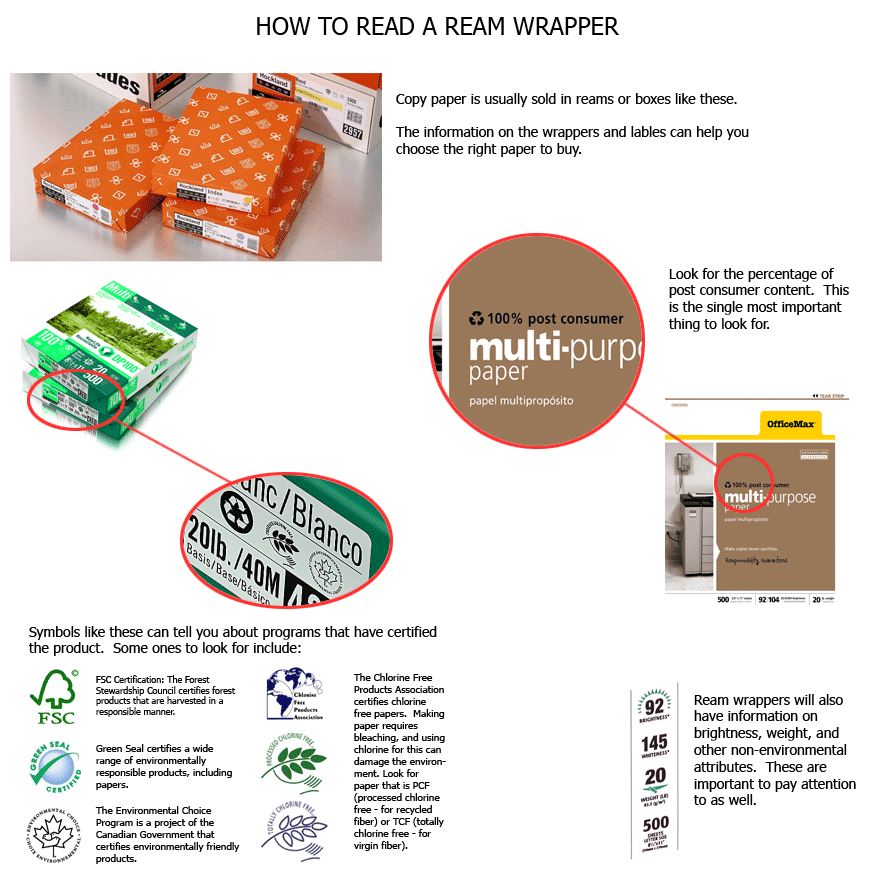
How Ya Gonna Find Recycled Office Paper?
Some years back I was driving to the one location in San Francisco that I knew for certain sold 100% postconsumer recycled copy paper. Halfway across town I thought, “How ridiculous is this?” Was the environmental impact of the drive defeating the purpose of trying to sustain the market for recycled paper? Back then obtaining ream quantities of recycled copy paper on a retail level was not a simple task—you had to know where to go.
So where do you obtain recycled paper if you need it by the ream or carton?
Lucky for me, one of the office supply superstores within walking distance now carries a good selection of recycled content office papers, including one brand that is 100% postconsumer recycled. Today, most paper users in the U.S. should be able to easily find recycled content copy paper.
Generally speaking, recycled content paper has not had substantial market share growth in the past 10 – 15 years. Right now, only about 5% of the pulp used to create printing and office paper in North America is made with deinked recovered paper. The other 95% still comes from timber that is pulped or some small amount of preconsumer recycled fiber. Most of the paper collected in residential curbside and business recycling programs is recycled into packaging, newsprint or tissue, both here in North America, and increasingly, in overseas markets such as China. Very little gets made into office and printing paper. In fact, some of the mills that make commodity commercial printing papers have recently cut back on the percentage of deinked pulp used in their recycled brands.
However, one of the really positive developments for environmental paper markets in the past few years has been the increase in availability of some types of recycled paper to consumers. This category of paper is sold as “copy," “laser," “inkjet," “multipurpose” and other similar applications. In the industry the grade is known as “reprographic” or “office paper”.
A major reason for this increased availability has been the result of agreements brought about by The Paper Campaign, an effort led by environmental organizations Forest Ethics and the Dogwood Alliance, to have major paper distributors offer more recycled content paper and paper products in their stores. This effort has been extremely successful and is no doubt the reason why we can now easily obtain recycled content office paper more readily.
Still, to maintain this availability, these products have to prove themselves as having market demand. Stocking the product in the store alone will not sustain the market for recycled paper products. The second part of the equation requires the consumer. Customers need to intentionally select and purchase recycled content paper.
But how do you know where and what to buy?
Some outlets are doing an outstanding job informing customers of recycled and environmental paper options. Many have recycled products available, to varying degrees—and still others could do a much better job of presenting recycled paper products.
The websites and product catalogs for the major office supply distributors do a good job of highlighting and profiling recycled products using the Mobius Loop (the recycled chasing arrows logo) on products and listing recycled content percentages. Some go further with search functions to narrow the selection to recycled products or bundling environmental products together, such as in Office Depot’s “Green Book” office products catalog. These centralized marketing devices make it easy to put environmental papers “on the menu”.
Where the major distributors fall short in promoting recycled paper products is at the walk-in “brick and mortar” retail stores. Some product wrappers do have recycled logos and content percentages; however the products are usually interspersed with a myriad of non-recycled products. Customers are required to literally get on their knees to scrutinize product labels. Shelf tags, when they exist, often offer very limited information to guide consumers. Store staff I have encountered have little in-depth knowledge of the paper products, likely the result of having thousands of products in stock and reserving information for items such as electronics, software and other more complex big-ticket items. In fact the positioning of reams of paper is classic loss leader marketing—always available but not as important to the bottom line as say, ink cartridges, digital cameras or office furniture.
So what is the best option to obtain recycled content office paper?
The best, most complete offerings appear to be through website or catalog purchasing. Selection and availability may be best through this avenue. However the fragile nature of the edges of ream wrapped paper could cause the product to suffer going through some non-direct delivery systems, and would require some additional, substantial protective packaging.
The walk-in retail establishments may offer a more limited selection, but require less packaging and may be best if the location is convenient. The larger of the walk-in retail outlets may require customers to be fairly well informed about which product they would prefer and what to look for.
Conservatree has created a very good listing of recycled content office papers—brands to look for and what the recycled content is. The listing is a selection of national and regional brands, many of which are marketed as reams directly to end-users. Large businesses and institutions such as universities purchase in greater quantities. Therefore the list does not include all private label, JWOD, WMBE or other branded products that may be available for large contracts or bids.
Conservatree also has created a very good primer on what to look for on product labels when choosing recycled paper.
Here are some other tips:
Standard Weight Paper
Most paper in this grade has usually been 20lb and proven to perform well. There is a lot of marketing of the heavier 24lb papers, which are 16% more fiber by weight. For general printing, 20lb paper works fine—it also costs less and requires less material to produce.
Create a Market
For years the advice to create a market and promote demand has been to let distributors know you want recycled paper…let the store manager know that you, the customer, would like them to carry it. This is a good idea and likely works well at local, independent retailers where they control the product selection. At the major chain distributors, the reality is that product selection is probably determined by the SKU barcodes that are scanned in at the checkout. Product stocking is influenced by the bean-counters at headquarters. So the best advice may be, at these locations, to find a brand you like and stick with it. One of the major knocks by the paper industry over the years has been that recycled paper is a fad. To create a market, consumers need to prove loyal customer demand. I remember the first branded 100% postconsumer recycled copy papers on the market…those brands are no longer made, likely due to perceived lack of demand.
Hot Tip
April 22 is coming up—Earth Day. Unfortunately, in many cases Earth Day gets treated as just another consumer marketing device. Yeah, just like Christmas. Oh well. For sure the major office supply distributors will trot out any and everything with a recycled logo that day. Check the store circulars in the newspapers that week—bound to be some good specials on recycled paper, so stock up—and don’t forget to bring in those ink cartridges to recycle.
So where do you obtain recycled paper if you need it by the ream or carton?
Lucky for me, one of the office supply superstores within walking distance now carries a good selection of recycled content office papers, including one brand that is 100% postconsumer recycled. Today, most paper users in the U.S. should be able to easily find recycled content copy paper.
Generally speaking, recycled content paper has not had substantial market share growth in the past 10 – 15 years. Right now, only about 5% of the pulp used to create printing and office paper in North America is made with deinked recovered paper. The other 95% still comes from timber that is pulped or some small amount of preconsumer recycled fiber. Most of the paper collected in residential curbside and business recycling programs is recycled into packaging, newsprint or tissue, both here in North America, and increasingly, in overseas markets such as China. Very little gets made into office and printing paper. In fact, some of the mills that make commodity commercial printing papers have recently cut back on the percentage of deinked pulp used in their recycled brands.
However, one of the really positive developments for environmental paper markets in the past few years has been the increase in availability of some types of recycled paper to consumers. This category of paper is sold as “copy," “laser," “inkjet," “multipurpose” and other similar applications. In the industry the grade is known as “reprographic” or “office paper”.
A major reason for this increased availability has been the result of agreements brought about by The Paper Campaign, an effort led by environmental organizations Forest Ethics and the Dogwood Alliance, to have major paper distributors offer more recycled content paper and paper products in their stores. This effort has been extremely successful and is no doubt the reason why we can now easily obtain recycled content office paper more readily.
Still, to maintain this availability, these products have to prove themselves as having market demand. Stocking the product in the store alone will not sustain the market for recycled paper products. The second part of the equation requires the consumer. Customers need to intentionally select and purchase recycled content paper.
But how do you know where and what to buy?
Some outlets are doing an outstanding job informing customers of recycled and environmental paper options. Many have recycled products available, to varying degrees—and still others could do a much better job of presenting recycled paper products.
The websites and product catalogs for the major office supply distributors do a good job of highlighting and profiling recycled products using the Mobius Loop (the recycled chasing arrows logo) on products and listing recycled content percentages. Some go further with search functions to narrow the selection to recycled products or bundling environmental products together, such as in Office Depot’s “Green Book” office products catalog. These centralized marketing devices make it easy to put environmental papers “on the menu”.
Where the major distributors fall short in promoting recycled paper products is at the walk-in “brick and mortar” retail stores. Some product wrappers do have recycled logos and content percentages; however the products are usually interspersed with a myriad of non-recycled products. Customers are required to literally get on their knees to scrutinize product labels. Shelf tags, when they exist, often offer very limited information to guide consumers. Store staff I have encountered have little in-depth knowledge of the paper products, likely the result of having thousands of products in stock and reserving information for items such as electronics, software and other more complex big-ticket items. In fact the positioning of reams of paper is classic loss leader marketing—always available but not as important to the bottom line as say, ink cartridges, digital cameras or office furniture.
So what is the best option to obtain recycled content office paper?
The best, most complete offerings appear to be through website or catalog purchasing. Selection and availability may be best through this avenue. However the fragile nature of the edges of ream wrapped paper could cause the product to suffer going through some non-direct delivery systems, and would require some additional, substantial protective packaging.
The walk-in retail establishments may offer a more limited selection, but require less packaging and may be best if the location is convenient. The larger of the walk-in retail outlets may require customers to be fairly well informed about which product they would prefer and what to look for.
Conservatree has created a very good listing of recycled content office papers—brands to look for and what the recycled content is. The listing is a selection of national and regional brands, many of which are marketed as reams directly to end-users. Large businesses and institutions such as universities purchase in greater quantities. Therefore the list does not include all private label, JWOD, WMBE or other branded products that may be available for large contracts or bids.
Conservatree also has created a very good primer on what to look for on product labels when choosing recycled paper.
Here are some other tips:
Standard Weight Paper
Most paper in this grade has usually been 20lb and proven to perform well. There is a lot of marketing of the heavier 24lb papers, which are 16% more fiber by weight. For general printing, 20lb paper works fine—it also costs less and requires less material to produce.
Create a Market
For years the advice to create a market and promote demand has been to let distributors know you want recycled paper…let the store manager know that you, the customer, would like them to carry it. This is a good idea and likely works well at local, independent retailers where they control the product selection. At the major chain distributors, the reality is that product selection is probably determined by the SKU barcodes that are scanned in at the checkout. Product stocking is influenced by the bean-counters at headquarters. So the best advice may be, at these locations, to find a brand you like and stick with it. One of the major knocks by the paper industry over the years has been that recycled paper is a fad. To create a market, consumers need to prove loyal customer demand. I remember the first branded 100% postconsumer recycled copy papers on the market…those brands are no longer made, likely due to perceived lack of demand.
Hot Tip
April 22 is coming up—Earth Day. Unfortunately, in many cases Earth Day gets treated as just another consumer marketing device. Yeah, just like Christmas. Oh well. For sure the major office supply distributors will trot out any and everything with a recycled logo that day. Check the store circulars in the newspapers that week—bound to be some good specials on recycled paper, so stock up—and don’t forget to bring in those ink cartridges to recycle.
Start of this Blog
I hope to be able to answer questions and stir the conversation about environmental papers
Please e-mail me at gerard@environmentalpaperconsulting.com
Hope you find this informative.
Please e-mail me at gerard@environmentalpaperconsulting.com
Hope you find this informative.
Subscribe to:
Posts (Atom)